The follow-up cadence that closes HVAC estimates (and why most contractors don't run one)
Most HVAC estimates die not because the homeowner picked a competitor but because nobody followed up. Here's the three-touch cadence that actually closes — what to send, when to send it, and the one thing to never do.
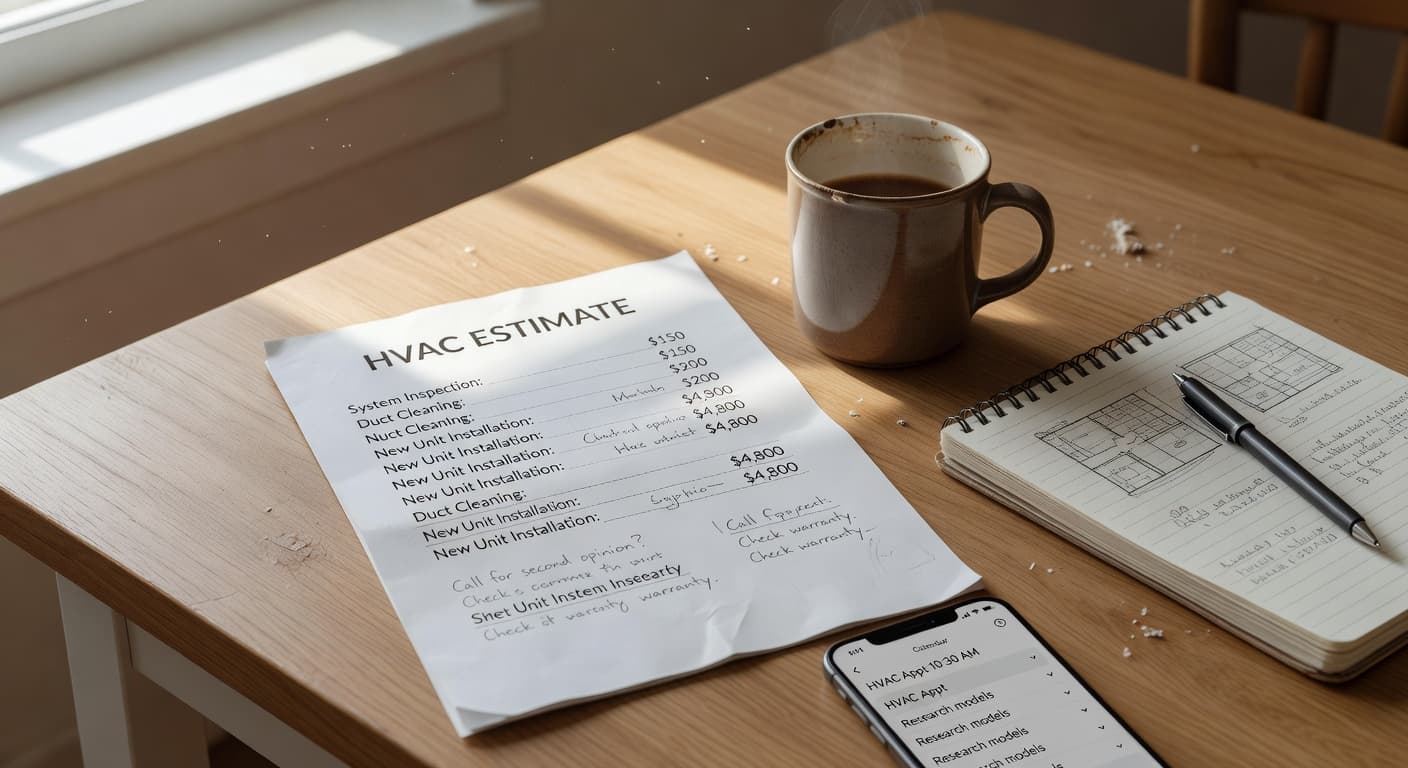
Estimates go out, then die in silence. Owners assume the homeowner picked someone cheaper. The actual reason is usually that nobody else followed up either, and the homeowner just stalled.
A three-touch cadence — 24 hours, 3 days, 7 days — each with a different purpose and tone. Stop selling, start showing up. The contractor who's present when the homeowner is actually deciding usually wins.
Why estimates go cold (and why it's almost never the price)
Most HVAC owners I talk to assume their estimates die because a competitor came in cheaper. Sometimes that's true. Most of the time it isn't.
What actually happens: the homeowner gets two or three estimates. They pick the one they feel best about, which is usually the contractor who seemed most responsive, most professional in their follow-through, and most present during the decision-making window. Price is a tiebreaker, not the primary signal.
The contractors I've watched run the trades for a long time figured this out years ago. They don't compete on price — they compete on attention. The estimate isn't the close; the estimate is the start of a 3-to-10-day conversation that ends with a yes or a no.
Most contractors don't run that conversation. They send the estimate. They wait. They get ghosted. They blame the price.
The actual buyer's decision timeline
Here's how a typical homeowner actually makes the decision after they receive your estimate. The timeline varies but the rhythm doesn't:
- Day 0 (estimate sent): Homeowner glances at it. Maybe reads it carefully, more often skims. Saves it in their email.
- Day 1–2: They're getting other estimates. Yours is sitting in a pile of two or three. They mentally rank them on price + gut feel.
- Day 3–5: Real decision window. They're talking to their spouse / partner. They might read the reviews on your Google Business Profile. They might ask a friend whose HVAC was installed recently.
- Day 5–7: Decision is made. They book someone. The ones they didn't book don't get a callback — they just go silent.
- Day 7+: Either the job has started or the project is on indefinite hold. After 7 days, you've usually lost the deal.
The point of this timeline is that the decision is being made on Days 3–5, not on Day 0 when you sent the estimate. If your only contact was the estimate itself, you're not even in the conversation at the moment the homeowner is actually choosing.
The three-touch cadence
Three follow-ups, each with a different purpose. Total time investment per estimate: under 10 minutes spread across a week if you do it by hand, zero minutes if it's automated.
Touch 1: 24-hour check-in
Purpose: confirm they received it and answer any questions while the estimate is fresh.
What to send: a short text or email. Casual. Not pushy. Something like:
Hey [Name] — just wanted to make sure the estimate came through OK. Happy to walk through any of it on the phone if anything's unclear. No rush.
Why this works: it shows up as a human moment, not a sales push. About 20% of homeowners will reply with a real question (which is gold — they're engaged enough to ask). The other 80% will think "good, this contractor follows up — that's a good sign" and not respond, which is fine. You've planted the seed.
What NOT to do at this stage: don't ask for the close, don't push urgency, don't mention price or discounts. The 24-hour touch is purely a presence signal.
Touch 2: 3-day check-in
Purpose: be present during the actual decision window.
What to send: slightly more substantive. Reference something specific to their job that demonstrates you remember them.
Hey [Name] — circling back on the [type of system / specific issue] estimate. A lot of homeowners ask me at this point about [common decision point — financing, brand selection, timing, warranty]. Happy to talk through any of that whenever's good for you.
Why this works: it positions you as the helpful expert at the exact moment they're making a decision. Roughly 30% of homeowners will respond to this one, and a meaningful percentage of those will book.
What NOT to do: don't drop the price, don't say "have you decided yet," don't make it about closing. Make it about helping them decide — which is a different posture and they can feel the difference.
Touch 3: 7-day final check-in
Purpose: catch the homeowner who got distracted, plus close the loop cleanly on the ones who chose someone else.
What to send: warm, short, and easy to reply to in either direction.
Hey [Name] — last note from me on the [system] project. Totally OK if you've gone another direction; if so, no need to reply. If you're still thinking it through and want to chat, I'm around this week.
Why this works: the explicit "no need to reply if you've gone another direction" removes the social friction that keeps homeowners from responding. About 15-20% will respond — some to book, some to politely close the door (which is also useful because now you know).
Most contractors never reach this touch. The ones who do close more deals than they realize.
What to never do
Three patterns that look like follow-up but actively hurt your close rate:
- Calling instead of texting/emailing. Cold calls feel pushy. The homeowner doesn't owe you a conversation. Text and email respect their pace and convert better at every touch in this cadence.
- Dropping the price. "I can do $200 off if you book by Friday." Once you do this, you've trained the customer that your original price was fake. You also lose the contractors-who-don't-discount market segment, which is exactly the segment that pays full margin.
- More than three touches in a week. Touch 4, 5, 6 cross from "professional follow-up" into "annoying." Three touches is the right number. After Day 7, leave them alone unless they reach out.
There's a fourth one worth mentioning: don't make the follow-ups feel templated. The whole point is the homeowner feels you remembered them specifically. Reference their actual system, their actual issue, their actual conversation. Five seconds of personalization beats any amount of cleverness in the template.
Setting up the cadence: manual vs. automated
Three options, from cheapest to most polished.
Option 1: Manual reminders in your CRM
If you use Jobber, ServiceTitan, Housecall Pro, or even just QuickBooks, set a recurring reminder on every new estimate: 24 hours, 3 days, 7 days. Write the touches by hand. Total time per estimate: 5–10 minutes spread across a week. Effective, sustainable for under ~20 estimates a month.
Option 2: Email automation tool
ConvertKit, Mailchimp, ActiveCampaign — any of them can run a 3-touch sequence triggered when you tag an estimate as "sent." You still personalize the first message of each touch; the tool handles the timing. Works well up to maybe 100 estimates a month.
Option 3: Workflow automation
What we build at Workflow Crew. Estimate goes out, our system automatically schedules the three touches, drafts them with the homeowner's specifics pulled from your CRM, queues them for your approval the morning of each send. You can edit any of them before they go out. Once you trust the cadence, you can flip it to autopilot. Works at any volume.
All three of these are better than not following up. The biggest revenue lift is not from picking the most sophisticated option — it's from going from zero follow-ups to one follow-up. Start there. Upgrade the tool when you outgrow it.
The math on what this costs you not to run
Rough numbers for a contractor sending 30 estimates a month.
- Industry-average close rate on estimates without follow-up: 25–35%.
- Industry-average close rate on estimates with a 3-touch cadence: 40–50%.
- Delta: 5–15 additional closed jobs per month.
- At an average residential HVAC job size of $5,000–$8,000, that's $25K–$120K per month in recovered revenue.
You don't have to believe the high end of that range. Believe the low end. The math still works.
One last thing
Estimate follow-up is the lowest-effort, highest-leverage workflow in HVAC. It doesn't require AI. It doesn't require new software. It doesn't require hiring anyone. It just requires showing up at 24 hours, 3 days, and 7 days with a short, human message that says "hey, I remember you, happy to help when you're ready."
Start tomorrow. Pull your last 10 estimates. Send a 24-hour, 3-day, or 7-day touch to each one depending on where they are in the timeline. Some will close just from that single nudge. That's data on what this cadence is worth, with zero new tools and zero new hires.